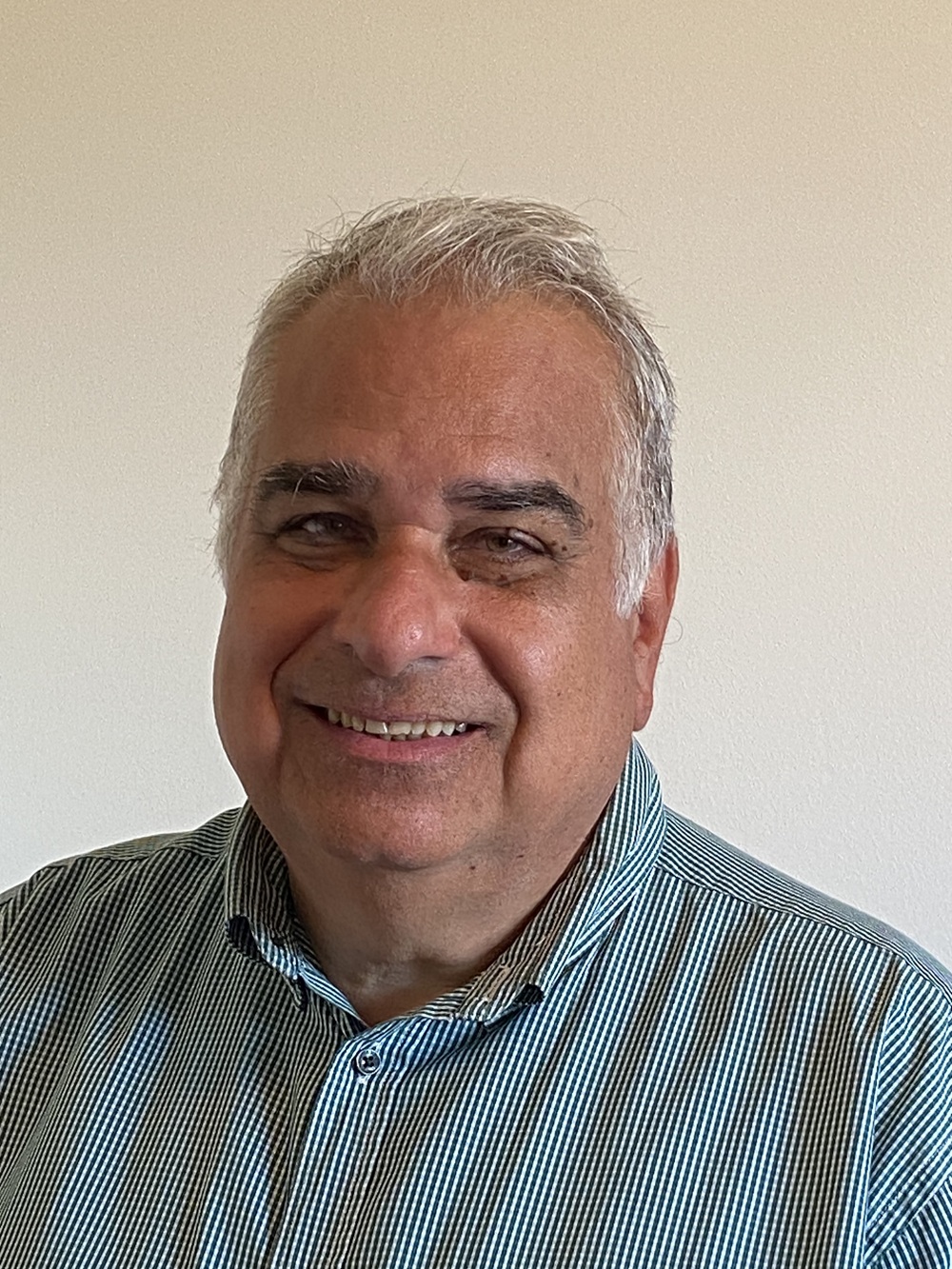
Speaker
Alejandro Svyatkovskyy Kholyavka (Universitat de les Illes Balears)
Date
02/12/2026 11:00 (CET)
Place
Conference Room
Black-hole ringdown is commonly described as a superposition of quasinormal modes (QNMs) whose complex frequencies are determined by the remnant spacetime, while their excitation amplitudes retain information about the perturbation that produced them.
In this seminar, I will present a spectral framework for understanding and controlling this excitation. We first show that QNM excitation can be interpreted as a spectral filtering process: each mode probes the Fourier content of the perturbation around its complex characteristic frequency, providing a direct connection between source properties and ringdown amplitudes. This picture also clarifies the origin of late-time power-law tails. While QNMs are associated with poles of the Green\'s function, tails originate from its low-frequency branch-cut contribution. Oscillatory sources shift spectral power away from zero frequency, exponentially suppressing the tail while simultaneously enhancing resonant QNM excitation. This provides a unified spectral interpretation of the transition between tail-dominated and ringdown-dominated responses. Finally, we extend this framework to the full excitation landscape in sourceparameter space. For oscillatory Gaussian perturbations, the landscape exhibits a spectral bifurcation separating broadband and frequency-selective regimes, as well as optimal-excitation branches and interference between the positive- and negative-frequency components of the source. These structures encode both the oscillation and damping scales of the quasinormal spectrum, showing that mode amplitudes and phases can themselves act as spectroscopic observables. Together, these results provide a unified view of black-hole ringdown as a sourcedependent spectral response and open the way toward the inverse problem of reconstructing properties of the perturbation from the observed ringdown.