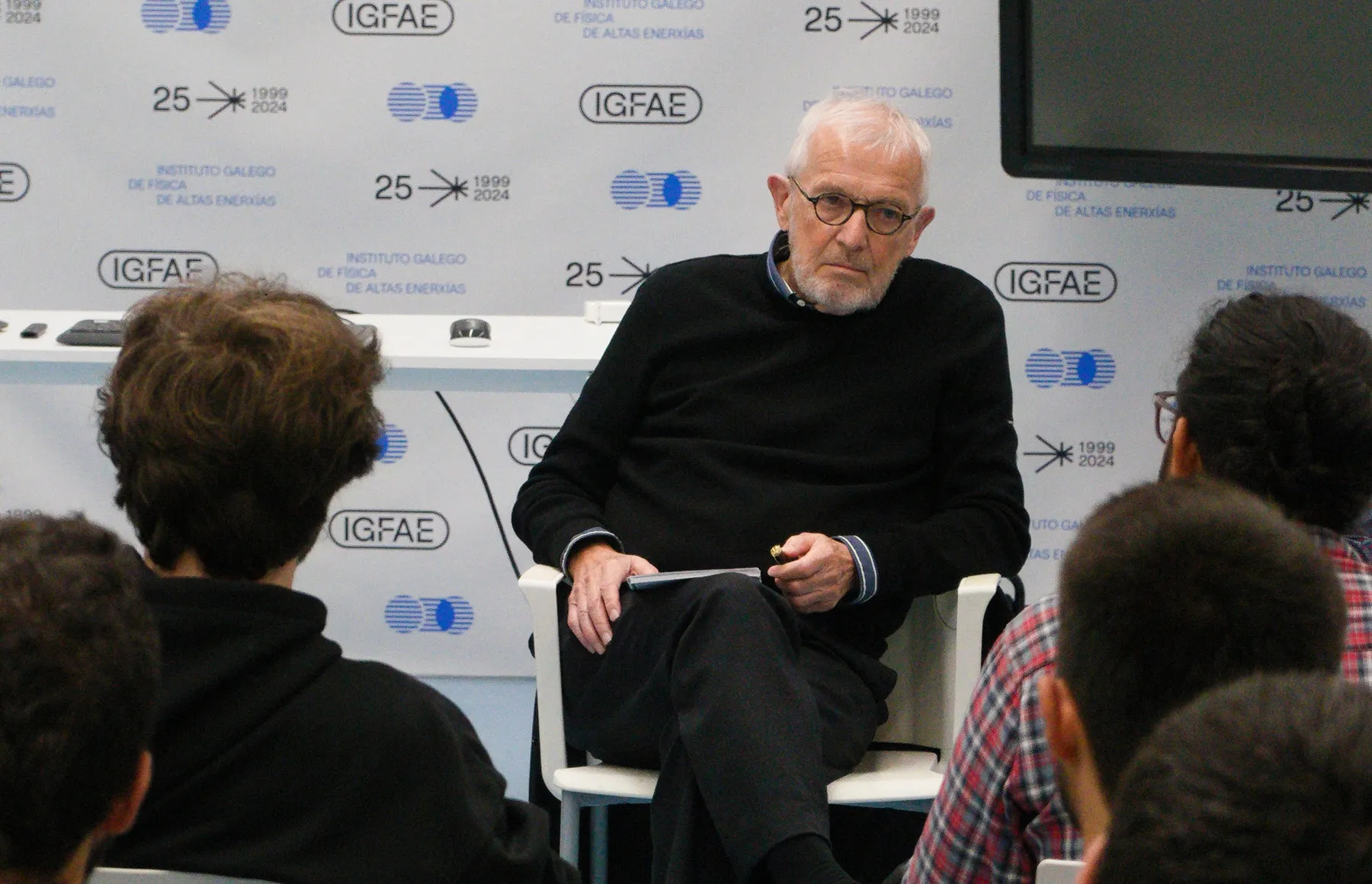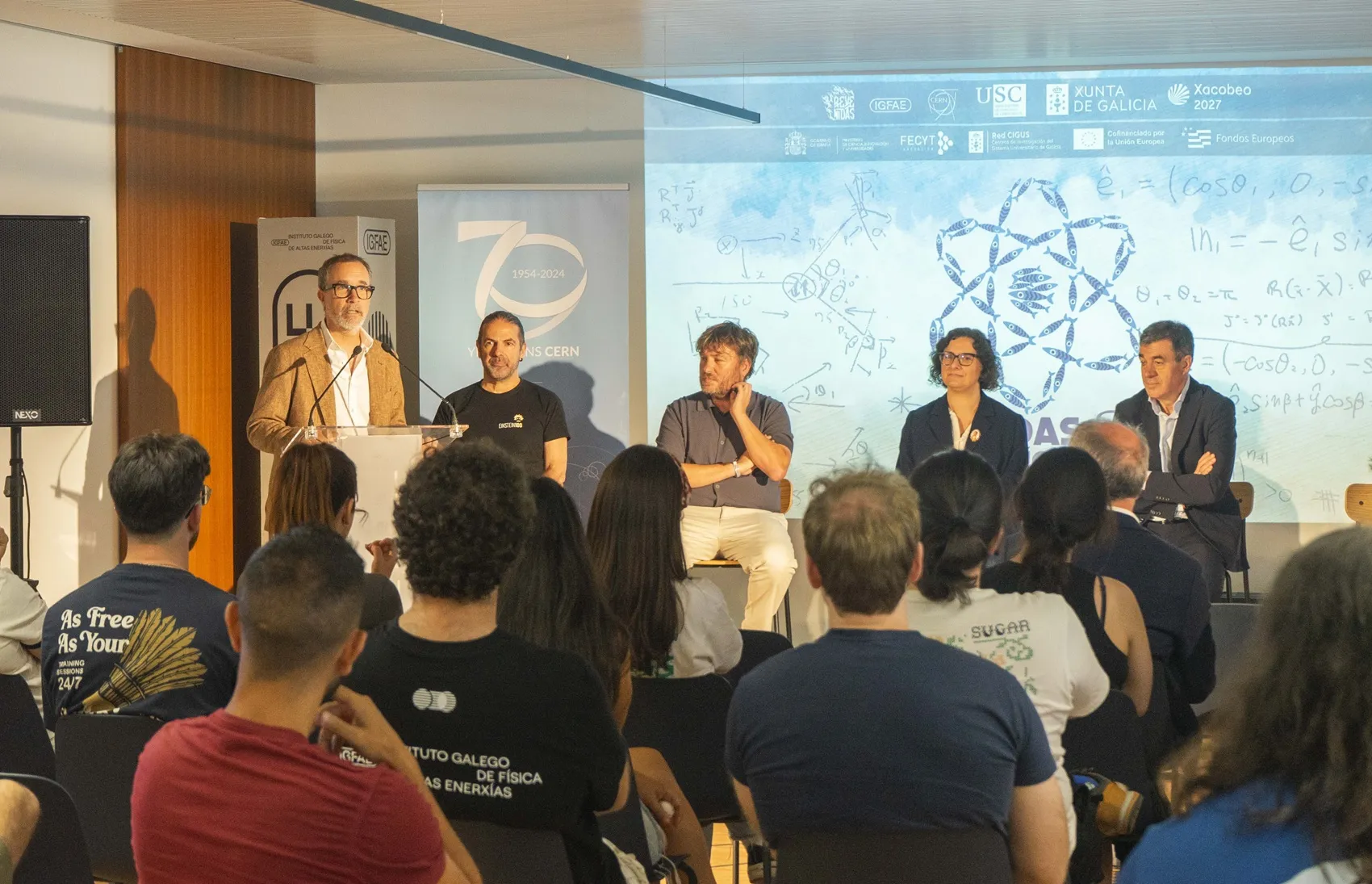
IGFAE headquarters hosted the presentation of the CERN Festival Programme, which will arrive this summer for the first time in Galicia. It will be at the Revenidas festival, in Vilaxoán de Arousa, from 10 to 13 September. There, the “Ondas e Partículas (Waves & Particles) stage will be installed, featuring some of the leading figures in science outreach in Galicia and Spain. The activity is promoted by IGFAE itself and the Revenidas Festival, in collaboration with the CERN & Society Foundation and the Spanish Foundation for Science and Technology (FECYT), with the support of the Xunta de Galicia.
The event was attended by the regional minister for Education, Science, Universities and Vocational Training, Román Rodríguez; the vice‑rector for Culture, Language and Heritage of the USC, Ana Cabana; the director of IGFAE, Carlos Salgado; the director of the Galician Innovation Agency (GAIN), Carmen Cotelo Queijo; the director of the Revenidas festival, Xoán Quintáns; and IGFAE researcher José Edelstein, who will be one of the speakers on the “Waves and Particles” stage. The event also featured a brief performance by Tapa d’Orella, one of the groups that will be part of the musical lineup of the Revenidas festival.
Lineup of the “Waves & Particles” stage
The scientific programme will include names such as Eduardo Sáenz de Cabezón, mathematician and presenter of the TVE programme Órbita Laika; Verónica Bolón, researcher at the University of A Coruña and winner of the Spanish National Research Award “María Andresa Casamayor”; IGFAE researchers Juan Calderón Bustillo, Marta Reina Campos and José Edelstein; as well as leading science communicators on social media, such as Adrián García (El Físico Barbudo), or CERN researcher Paula Desiré.
Topics to be addressed on the stage include the eclipses that will be visible on the Iberian Peninsula between 2026 and 2028, black holes, proton therapy, the need for more sustainable AI, the relevance of science in sports such as basketball or football, or the physics behind concert mosh pits. There will also be space for workshops to taste ice cream made with liquid nitrogen, observe cloud chambers or build solar chargers. Likewise, some of the artists from the Revenidas musical lineup are expected to appear on the “Waves and Particles” stage.
During the presentation held this Tuesday, representatives of the institutions involved highlighted how the project builds bridges between research and society, bringing knowledge closer to a non‑specialised audience. Carlos Salgado, director of IGFAE, emphasised IGFAE’s commitment to engaging with the arts from various perspectives, in line with the work carried out in recent years through initiatives such as the Artlab IGFAE artistic residencies.
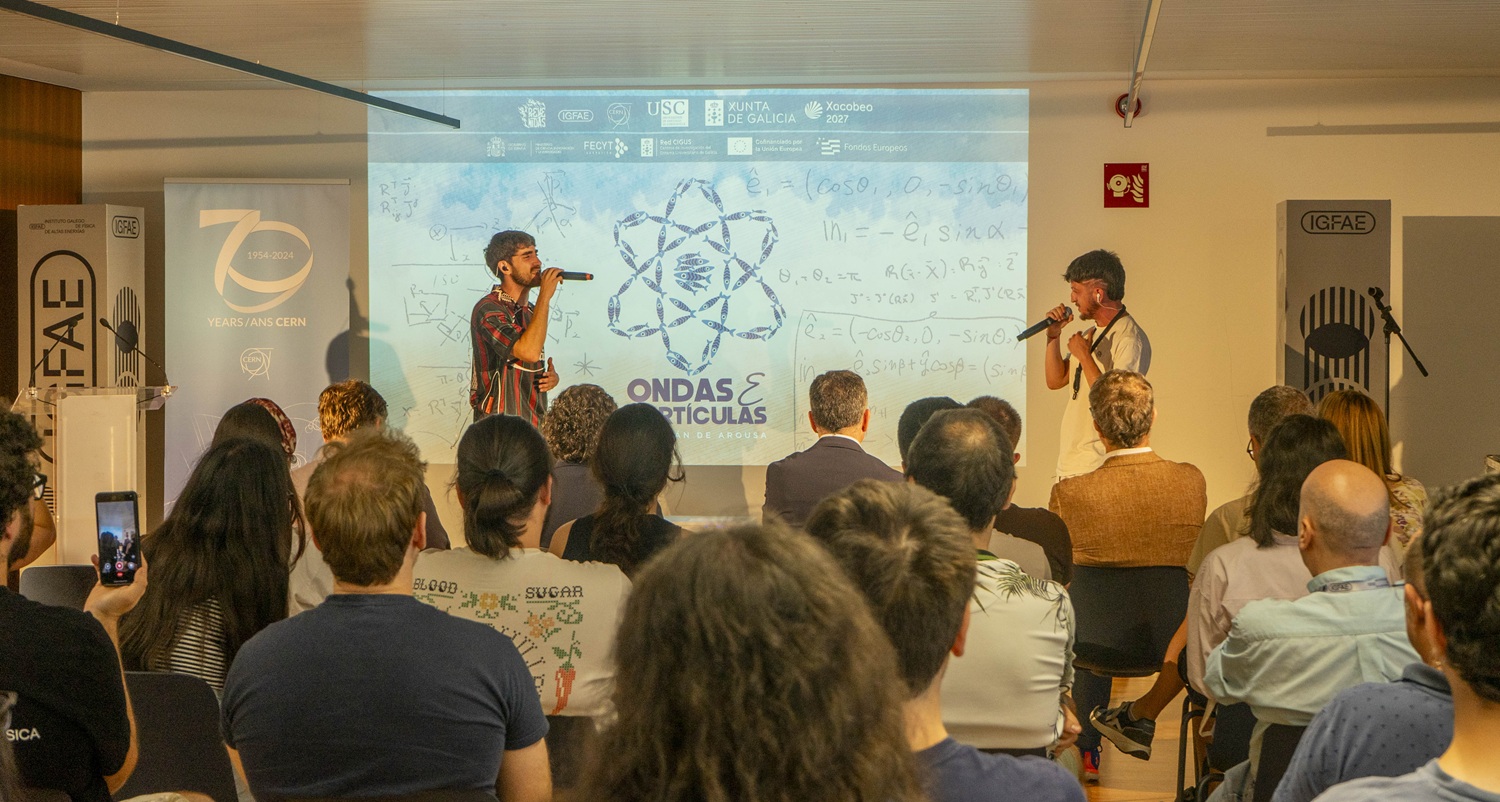
On behalf of the Revenidas festival, its director, Xoán Quintáns, highlighted the value of “initiatives like this, which seek to better understand the world we live in, be creative and solve day-to-day problems.”
José Edelstein, IGFAE researcher and one of the leading science communicators in Spanish, spoke about his previous experience in the CERN Festival Programme, in the edition held in 2024 in Castellón: “My impression is that the best audience is people who think science has nothing to do with them; suddenly they enter the talk and find something fascinating that they didn’t know”.
The vice‑rector for Culture, Language and Heritage of the USC, Ana Cabana, stated: “Bringing science to a space of encounter, coexistence and celebration of culture is an extraordinary way to break down barriers between research and citizenship”.
The event was closed by regional minister Román Rodríguez, who emphasised that this project “further strengthens the link between Galicia, the USC and IGFAE with CERN” – referring to the ongoing process for the construction of a prototype of the Future Circular Collider – and does so “in a fun way for people, explaining what science is and what it is for, helping society move forward”.
About the CERN Festival Programme
The CERN Festival Programme is an initiative promoted by the CERN & Society Foundation. Since 2016, the European Organization for Nuclear Research has been promoting this project with the aim of bringing science to audiences that do not usually attend outreach events. In its 10-year history, the programme has welcomed tens of thousands of festival attendees in the United Kingdom, Germany, Spain, the United States, Slovakia and Denmark. The Revenidas will be the only stop this year on the Iberian Peninsula for the CERN Festival Programme.