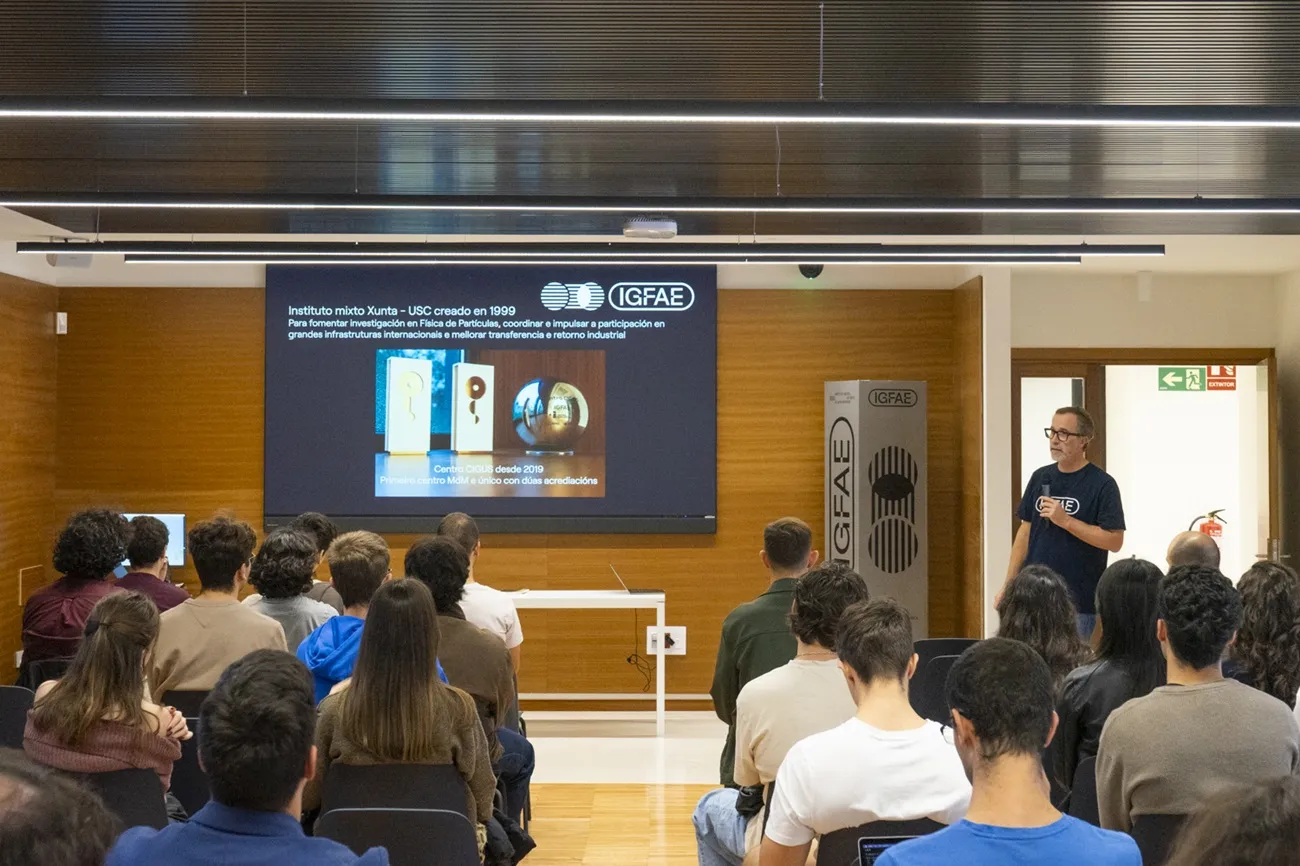
The Instituto Galego de Física de Altas Enerxías (IGFAE), a joint center of USC and the Xunta de Galicia, has just officially joined the CMS (Compact Muon Solenoid) experiment at CERN, one of the main collaborations within the European Organization for Nuclear Research. CMS, together with the ATLAS experiment, was responsible for observing the Higgs boson in 2012, one of the milestones in particle physics in recent decades.
The CMS spokesperson, Anadi Canepa, communicated the decision to the director of IGFAE, Carlos A. Salgado, after it was approved by the experiment’s collaboration board in recent weeks. In this way, a process that began in spring 2025 is concluded, which included a visit by several CMS representatives to Santiago de Compostela in November, among them Anadi Canepa, to closely learn about the new IGFAE facilities and its scientific and technical capabilities.
The IGFAE team in CMS will be led by researcher Xabier Cid Vidal, also an associate professor at USC. “The incorporation of IGFAE into CMS represents a landmark for Galicia, since it is one of the largest scientific collaborations in the world”, Cid Vidal highlights. “It is a general-purpose experiment, which has its data-taking guaranteed until the 2040s, which ensures the presence of IGFAE at the LHC for future generations of physicists,” he adds.
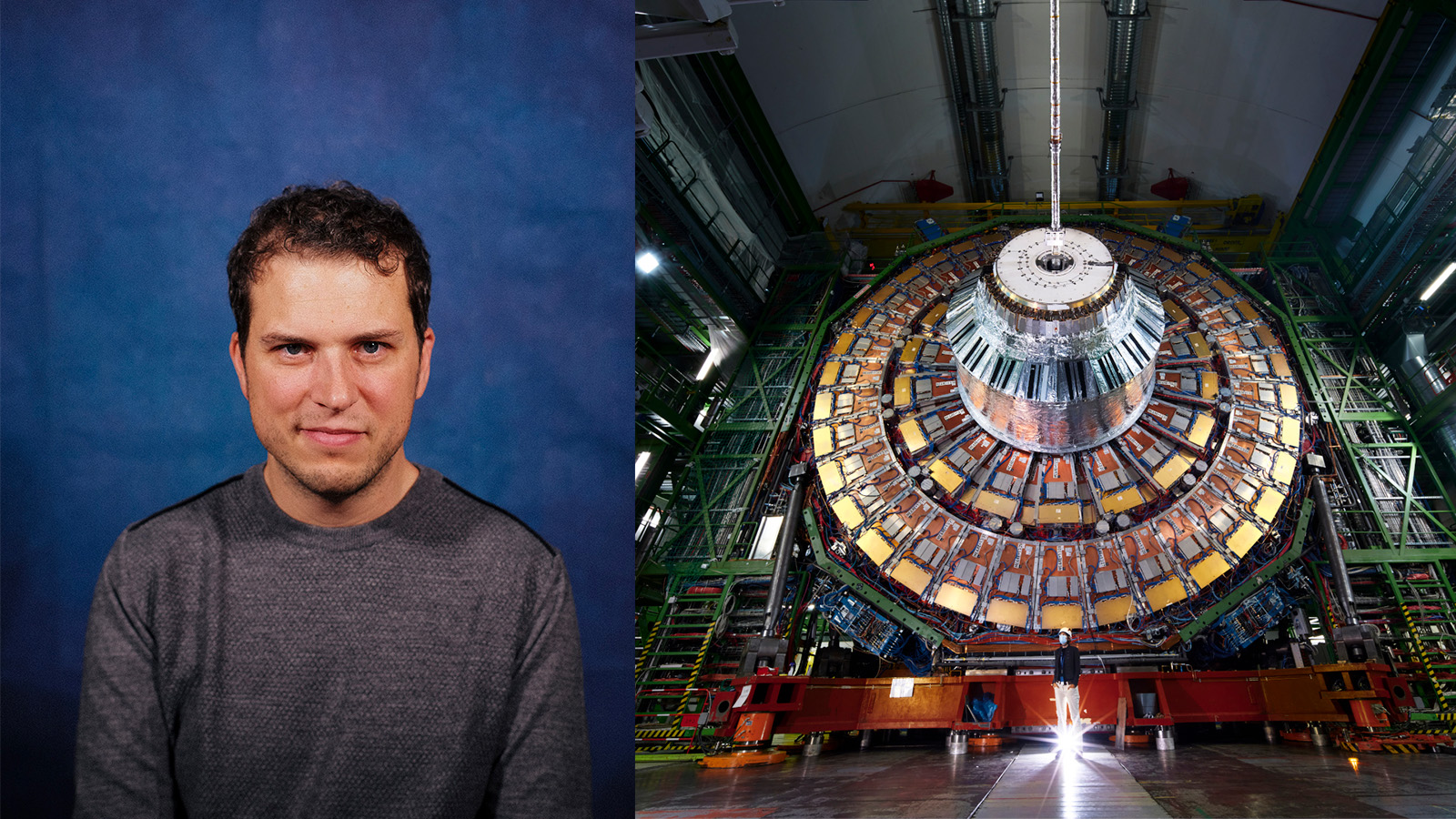
Xabier Cid will lead the IGFAE’s work at the CMS, which has the largest solenoid ever built. Image credits (Víctor Díaz Díaz / Samuel Hertzog – CERN).
The incorporation into CMS will also allow strengthening of the IGFAE team, opening new and promising opportunities for graduates of the Institute, but also for attracting external talent working in CMS from other institutions.
In the scientific field, IGFAE will contribute to CMS in the search for the so-called “long-lived particles” (LLPs) and the detection of particles from dark sectors, as well as in contributions to strange-flavour physics. It will also bring its theoretical experience in phenomenology studies and analysis strategies.
From a more technical perspective, the Galician Institute will contribute its knowledge in real-time computing; in trigger (the systems that allow deciding which particle collisions should be considered for analysis); detector R&D and machine learning methods for classification, reconstruction, and simulation of signals.
The Institute’s entry into CMS is based on the long trajectory that IGFAE has accumulated in the aforementioned areas of work, after decades participating in the LHCb experiment, another of CERN’s main collaborations, where the Institute leads the Spanish representation.
About the CMS collaboration and its detector
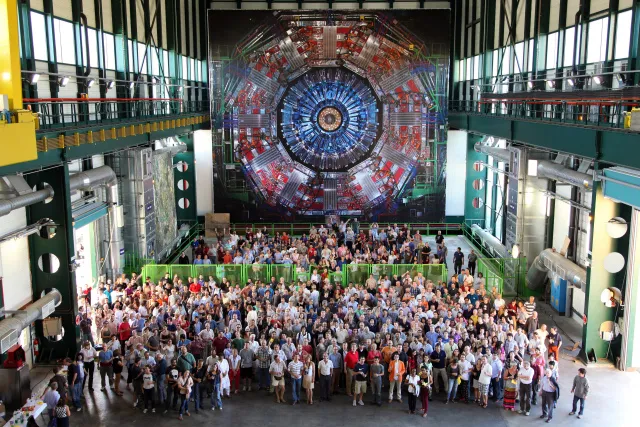
The CMS collaboration brings together more than 6,000 people (including research, technical, engineering, and computing staff) from almost 60 countries, representing more than 250 institutions and universities. These figures make it one of the largest scientific collaborations in the history of science.
This team is responsible for operating and collecting data from its detector, the Compact Muon Solenoid, with the objective of answering the questions that remain around the Standard Model of Particle Physics or the possible existence of dark matter.
The CMS detector is installed around the largest solenoid magnet ever built, with a field of 4 teslas, about 100,000 times greater than the Earth’s magnetic field. This field is confined by a steel “yoke” that makes up most of the detector’s weight (in total, 14,000 tonnes). It measures 21 meters in length, 15 in width, and 15 in height.
In this way, it functions as a huge ultra-high-speed camera, taking three-dimensional images of particle collisions, which occur at a rate of up to 40 million times per second. Detecting and analysing these collisions, and the particles produced in them, helps to learn more details about the fundamental elements of matter.
In 2012, the CMS experiment, together with ATLAS, achieved the milestone of detecting the Higgs boson, the only particle predicted theoretically by the Standard Model that had not yet been observed experimentally.